|
Project
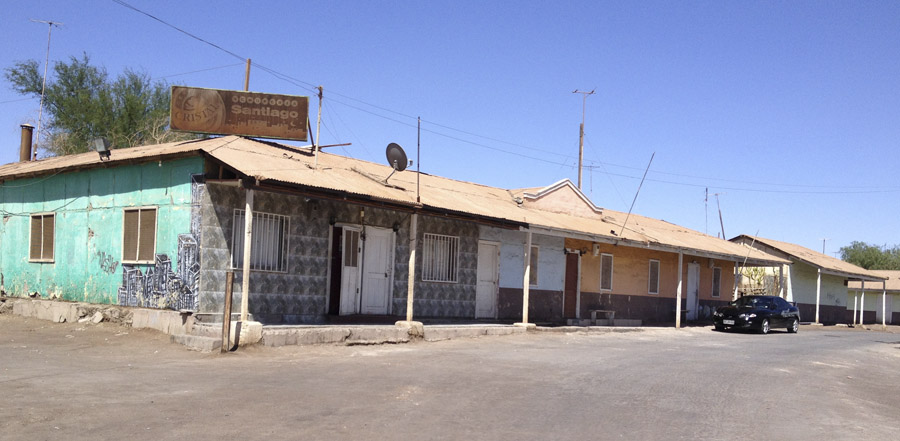
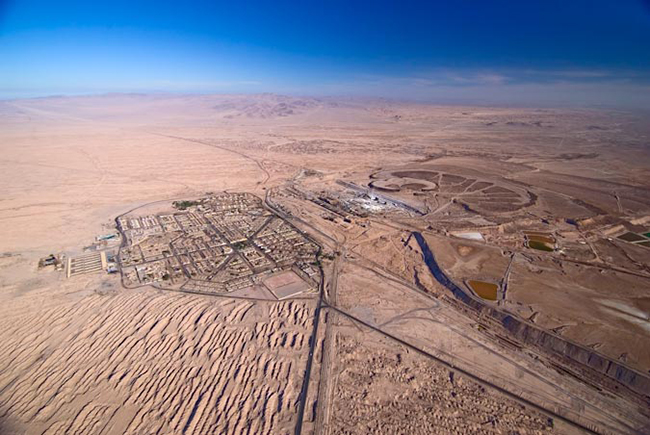
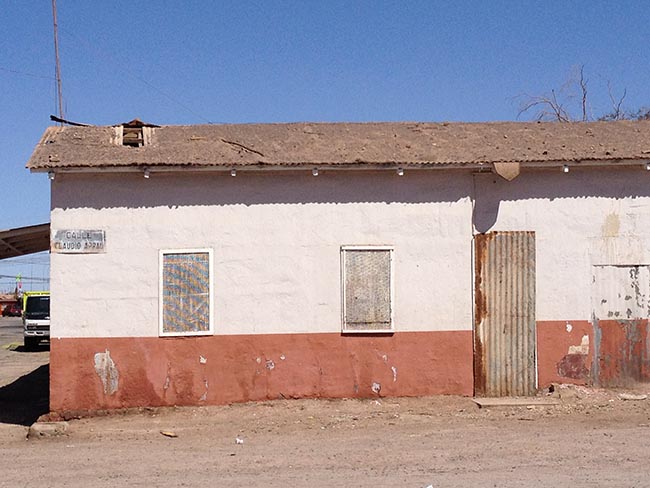
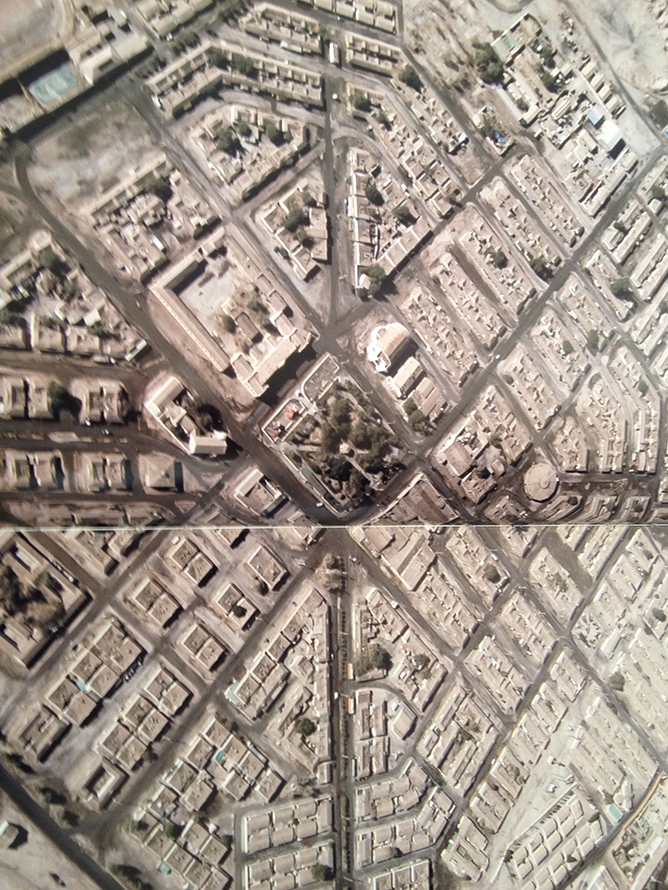
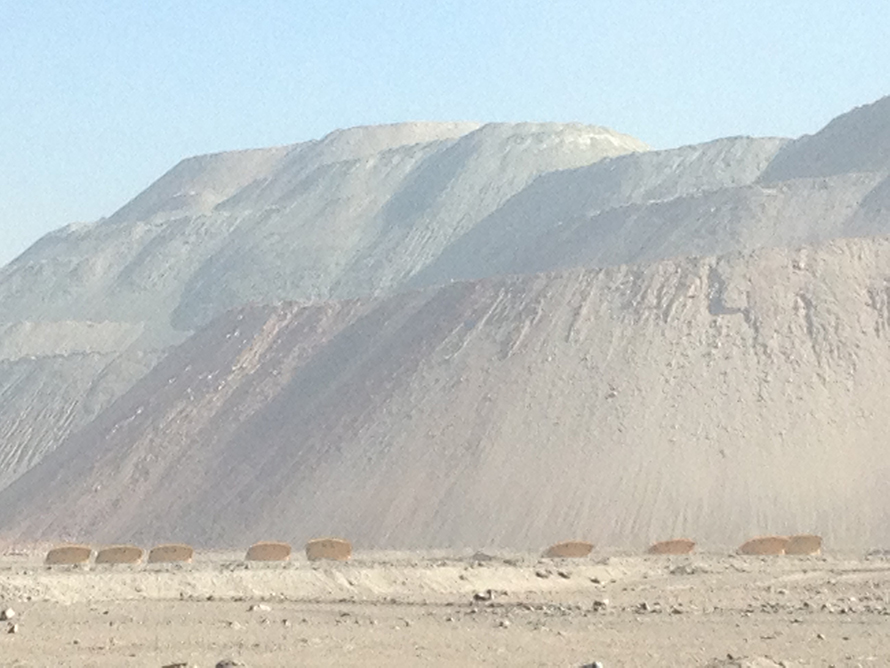
Located in the so-called Pampa del Miraje, 1,200 m above sea level, 8 km west of the Loa River and 70 km from the port of Tocopilla, is the María Elena nitrate office in northern Chile. Founded in 1926, on the old Coya Grande office, its birth responds to the interest of nitrate entrepreneurs, who saw a great decrease in the production of nitrate extraction, together with the boom in the commercialization of synthetic nitrate.
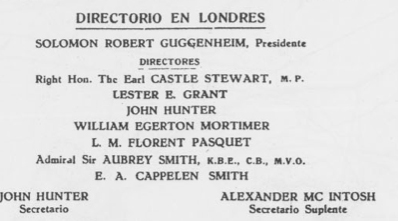
With North American capital from the Guggenheim Brothers company, María Elena was, together with the Pedro de Valdivia office, one of the nitrate companies that modernized its extraction system, reducing production costs thanks to the newly invented Guggenheim System, which quadrupled the production of Chacabuco, the Largest plant in the Shanks system (old way of processing caliche). Elías Anton Cappelen Smith is the engineer who created this system and who had already tested it in Chuquicamata, with copper, suggesting that the Guggenheim brothers try and make the investment in María Elena, for extracting saltpeter. The Anglo-Chilean Consolidated Nitrate Co. responsible for the María Elena office and the Lautaro Nitrate Co. Ltd, investor in the Pedro de Valdivia office, had Solomon R. Guggenheim, a North American businessman and modern art collector, on their board.
|
|
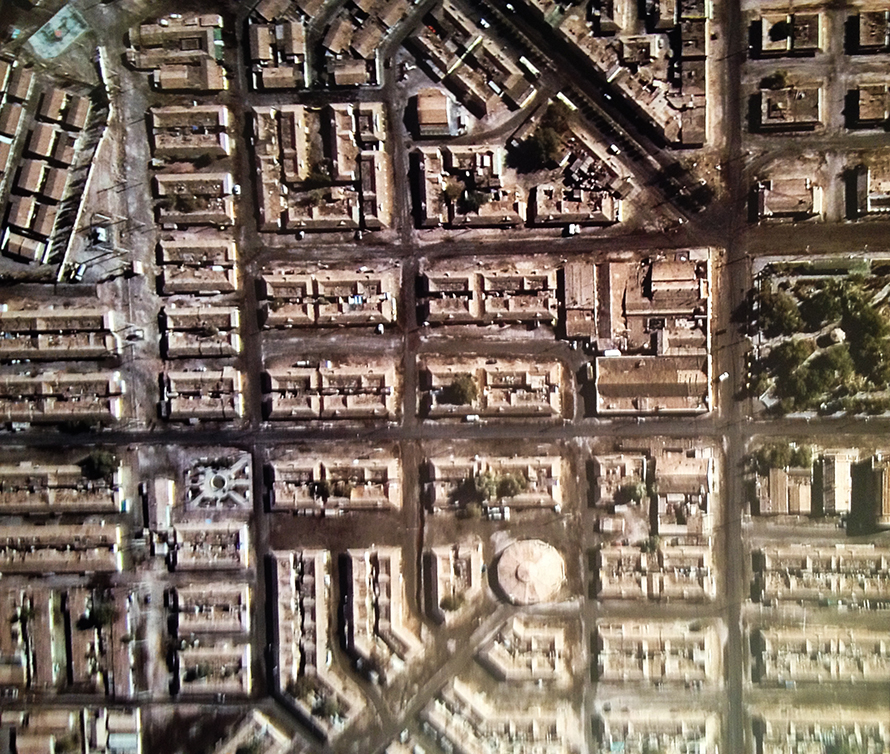
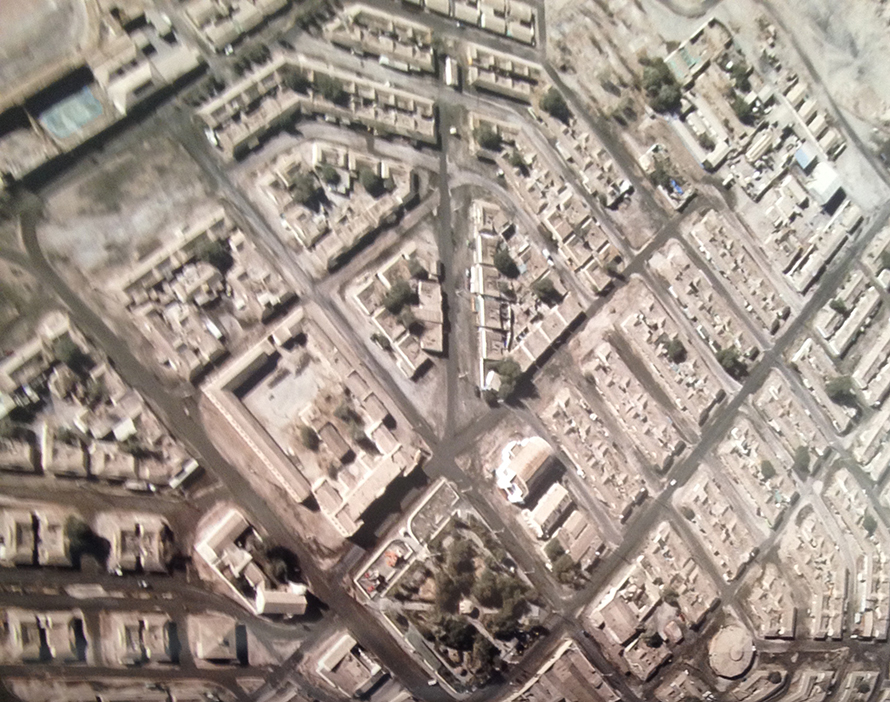
María Elena was established as one of the main nitrate settlements in northern Chile. City-industry that was able to meet all the basic requirements of its inhabitants, from social stratification from the classification of homes to the provision of spaces for fun, education and recreation such as: school, library, plaza, theater, museum and swimming pool among others. Currently, María Elena is the only natural sodium nitrate producer in the world that continues to operat.
Melanie Smith's work has been defined by her interest in rereading the formal and aesthetic categories of the avant-garde and post-avant-garde movements, questioning the place and horizon of heterotopias.
In previous pieces, she has addressed this, however the most important reference in relation to the María Elena project is the film Fordlandia, 2013. In essence it is a contemporary critique to the vision of Ford's attempt to implement the concept of a modern town in the middle of the Amazon.
|
The project María Elena, as a continuation of this research, focusing on a contemporary critique of the vision of the Guggenheim family's nitrate plant to create an ideal town in the Atacama desert that subverts the relationship between raw material, architecture and nature. This project explores proximity as potential configurations of the place, as well as the vital singularity of bodies, nature and memory.
Smith deconstructs the visual archive of María Elena as a symbolic place of absence, presence and dislocation. In this way, the objective of this project is not to document María Elena, but to create layers of visual encounters that reflect the contemporary experience of living.
To do this, different narrative and visual strategies are thought about life as matter and power over the landscape as a utopian construction of the gaze and about testimony as a deconstructive moment of memory and history.
In particular, the resource of the voice outside the plane is the way in which the relationships between memory, migration and history are approached. More than as a place, María Elena will be represented as an imprint.
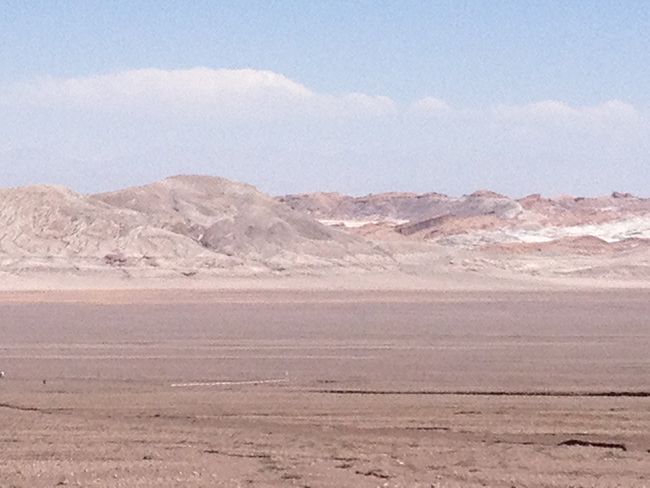
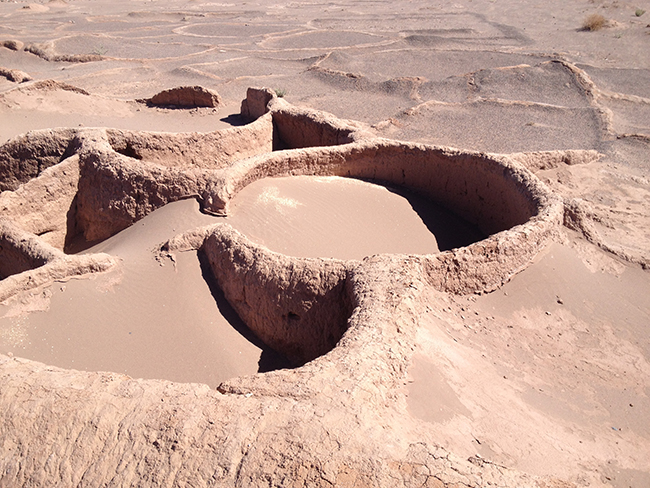
An attempt will be made to create visual parallels between crystalline structures and the cell as an architectural structure: it is impossible to represent the relationship "man and nature" and to think of technology as mere domination of life. Where nature "takes life" the earth is something more than the world and living is something more than human.
|
La obra, en proceso, consiste en tres partes, la producción de una pieza de video, un archivo de información visual que acompaña la película, y una serie de pinturas.
Más que como un lugar, María Elena será representada como una impronta. Se intentará crear paralelos visuales entre estructuras cristalinas y la célula como una estructura arquitectónica: se hace imposible representar la relación “hombre y naturaleza” y pensar en la tecnología como mera dominación de la vida. Donde la naturaleza “toma la vida” la tierra es algo más que el mundo y vivir es algo más que lo humano. Esto se intentará conseguir como momentos estéticos en el proyecto.
The aesthetic strategy of the video piece will consist of several moments to create the surface and frame an intensive field and modulation of various levels of configurations. Regarding the surface, intensity and presence, the shots and framing, it is intended to work with saturated and open frames, intense surfaces will be produced where the frame will function as a micro-macro dichotomy; open skies, crystals, close-ups and aerial shots.
Narratively, a sound log was build as an affective distension of time towards the journey to and from María Elena and surrounding areas.
Without looking for a continuous line story, the narration is based on the relationship between the voices / protagonists and sounds that dislocate in their intensity and meaning. This will establish an affective mediation between informal material (sound, touch, performance actions) and at the same time will construct time surfaces: present, memory, reminiscences and history.
Through this resource, a game of visual anachronisms will be established, which refer to historical and poetic moments on which the image is stretched.
|
Melanie Smith on the María Elena project
How did the project come about and at what stage is it currently?
It arose from a conversation with Alexia, we had talked about the possibilities of this place, María Elena in the Atacama desert, knowing that she had ancestry from the English industry. She suggested it thinking about previous projects of mine in distant places and in this type of industrialized and abandoned places, with this postcolonial thinking; utopian projects in remote places. And it all came together, I really liked the idea. So, after she was able to gather the resources, we did this pilot trip to San Pedro de Atacama. In those days we talk a lot. At that time the idea of making a film piece about this place was born, there was no project prior to this visit. And now we have a sketch.
What could you anticipate in that first visit at the place?
We went to María Elena and things happened like, for example, that on route a pig appeared and it occurred to me to use the pig as a kind of protagonist. My projects are never descriptions of a place. They are certain suggestions of these heterotopic places. The idea here is to create a kind of story about this place, also thinking a lot about painting. We couldn't see the place from above but we did see images previously and material that Alexia had collected. From above, María Elena, the nitrate fields, in my opinion form a very pictorial palette of colors. We talk a lot about this and how to develop a fiction, following another project I did, Fordlandia, thinking about the idea of working with different landscapes (in that case very tropical and now very arid).
What expectations do you have of the execution process?
For now there is the sketch, I think that once executing that sketch there may be things that change. We have not yet delved into it, for example, what the use of nitrate matter, the real protagonist, means. I would be interested in developing a work around the arid and the matter of salt. One day we went to a kind of oasis, and when you get into the water, you float and there is something that happens with the amount of salt that your body has a positive relationship to, instead of sinking you float because of the density of the water. I don't know how I can achieve it, but I would like to be able to relate this bodily effect, with the matter and the aridness of the place.
|